Friday, April 2, 2010
Working With Passion by Tushar Joshi
Sunday, September 21, 2008
Manage your KRAs
With the appraisals you have some KRAs (Key Result Areas) assigned to you. Do you know these KRAs will be rated again when there will be another appraisal? I think yes, you know this very well.
KRA is just like any other task assigned to you. The only difference is the project name is next appraisal and the project manager for release and delivery of this task is YOU.
As soon as you start thinking about the KRA’s in this way you can feel the gap between the actions you are following and the actions needed to complete these KRAs. Let us think about what more can we do to successfully deliver our KRA points as expected.
Understanding the KRA
- What is the meaning of your KRA
- If you are unclear about this then the first step shall be to write down the actual meaning of the KRA
- The meaning can be discussed with the Project Manager or pears.
- What activities are expected in your KRA
- Write down the activities required to fulfil the KRA
- Write down any resources or tools you will be using for completing the KRA
- Get this list approved from the project manager or the reporting authority who will be responsible for your next appraisal
Executing the KRA tasks
- Assuming “Next Appraisal” as a project
- Plan for the deliverables in your KRA
- Provide a milestone plan for them
- Write schedule, i.e. tentative dates for the completion of the milestones of your KRA activities
- Write Acceptance criteria of the KRA. When you will say that the KRA is done, what are the points that prove that the KRA is actually done? Get these acceptance points approved so you can get a clear rating of 3,4 or 5 in the next appraisal
- Monitor and Control the activities
- Like any other project monitor the execution of these KRA’s
- This is a unique situation where you are the project manager and at the same time you are resource responsible for completion of the project
- Take decisions and find out any slippage in the task schedule according to the plan
- Plan the days according to the health of your KRA project. You will have to decide whether there is a fire in your project this time, and may be cancel some recreation activities for completion of the KRA tasks
- Keep a log of all the activities done for the KRA tasks so that you can make them available when asked
- Deliver the KRAs
- If you can attain the KRA in less time or better than it was expected then you can get a rating of 4 or even 5 for it. Earn the rating by proper planning and execution of the KRA tasks.
- Appear for the appraisal discussion with all the related log files and data you have created for execution of KRA tasks. You can also show your KRA plan, monitoring log and decisions you have taken while executing the KRA tasks.
Wednesday, April 2, 2008
Motivation maintained
I have gone through your recent article on "TASK ASSIGNED" . The article looks well formatted and covers most of the points that a person should follow to complete a task not only related to the work he does, but also tasks related to his day to day life. I do agree that this method works and is a tested one; by many but there is a different scenario to this one.
What to do when a couple of people are engaged in a common job and you have to wait for the other person to complete his part. How to keep yourself motivated and targeted to work under such situation. Some times it does happen that you are through with your part and there is a long wait in between.
How can we utilize that time and get something very fruitful for us that might benefit the team and might help to upgrade yourself to a new level.
I am looking forward to your views on the same.
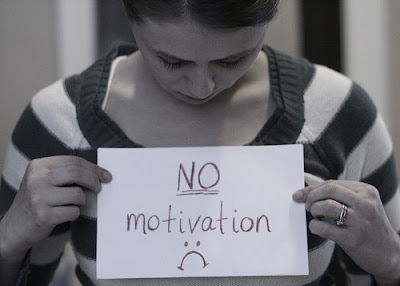
(Image courtesy Amy )I can see the situation that my task is complete and it is now waiting for some one else to complete their task so I can integrate them or then we can proceed to next task which depends on both these tasks. I can understand I am waiting for someone but does that mean I have no work? Let me figure out my motivation for doing tasks. I do these tasks for maintaining the job as a primary motivation but important motivation is also to keep myself satisfied with my job and yes also to rise up in the company to newer more responsible positions.
As soon as I start looking towards my goal of rising up the ladder of responsibility the answer to whether I have no work now becomes clear in front of my eyes.
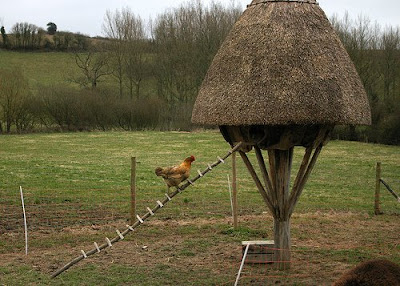
(Image courtesy Johnnie Walker)Actually when I am waiting for something to happen and I am apparantly not assigned to any task for some period I am getting paid for doing nothing for that period. I consider this time as a paid time to practise my jump to next level in the organization. All next levels demand you to take more responsibility and the time when I am unassigned explicitly to a task is the exact time to think about newer responsibilities I can take.
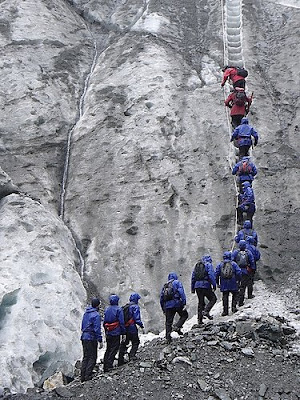
(Image courtesy Kool)So now as I remember that in all my goals rising up the ladder of responsibility is also one goal, this makes all my unassigned time available to me for the next move. I must think about what to learn so I can take the next level responsibility. I must take initiative to grab that responsibility.
If I want to become a team leader from developer, will they make me the team leader overnight? How will the management know that I am capable of taking up the responsibility of the team leader. This tells me that I must show the qualities of a team leader while I am assigned to a developer role. So the management must see a potential team leader in me even while I am still a developer. This perspective will lead me to make tasks which are secretly assigned to me and which I can grab by taking initiative.
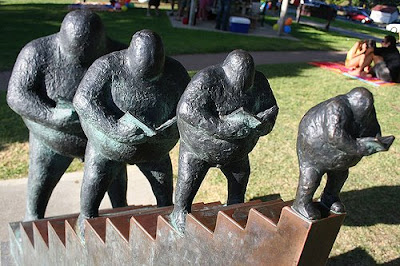
(Corporate ladder - CEO View)
There is a ladder of responsibility and person whom I report has more responsibilities than me. If I can figure out how to make the tasks of my superior easier, in this process I am actually learning how to become like them.

(Corporate Ladder - Worker's View, image courtesy KC)We can think that the superiors are just for harassment, or the management is only putting pressure on me. There is always a viewpoint of the worker which says that the management grows by exploiting the subordinates.
There is a different perspective also, a positive perspective, a powerful perspective to see the same image from top side. Everybody is working according to the responsibilities assigned to them.
If I want to climb up I must start feeling the responsibility the pain the concerns of that level and make myself a potential candidate for that place. This concept will always guide me find ways , find tasks, find newer responsibilities to grab when I have no apparent work assigned to me.
Coming to the answer for the question asked in the mail I receive. When I am done with my task and I am waiting for somebody to complete their task what shall I do.
I can help them achieve their task faster
I can figure out and design the next step of the tasks and keep my design ready
I can refactor the design made till now
I can think about the overall project, do I know each and every part of the project? Is their any domain involved which I can explore and grab in this time?
I can think of the bottlenecks in the project and try to become a solution for those bottlenecks
I can start thinking about the concerns of the immediate superior person, can I make his task easier by keeping some report ready? Can I actually see beyond the task assigned to me and find hidden tasks those can be taken up by me.
And the opportunities are endless my friend, only the perspective needs to be changed. How to change the perspective? Easy, just check up with your goals, they will guide you to the next step in your action plan.
with regards
Tushar Joshi, Nagpur
Tuesday, April 1, 2008
Synergy Experienced
Even after this flexible time in one scrum our team decided to fix a common time for the team to have lunch and also for the snacks.
Now our complete team sets the Skype status to "Away for Lunch" at 1:00pm and joins back the work before 2:00pm. This is done in agreement as a team. I feel this as a synergistic decision. This decision taken by the team has created a spirit of team in one more way. We have one more things to tell all about what we do as a team. This one act saves lot of time as all are away for the same 1 hour window and become available for collaboration at the same time.
(Snacks image courtesy by NTT)The same thing we have done for the snacks time. Our team now head towards the pantry at 5:00pm and enjoy the snacks time together for half an hour. We join back at work before 5:30pm and this way again show our support to the team.
By setting a fix time window for lunch and snack we achieve better productivity and coordination in the team. It feels good to follow a decision taken collectively as team as it connects me with my team. Just following one decision taken collectively I can feel involved and more connected. This is an amazing feeling.
with regards
Tushar Joshi, Nagpur
Wednesday, March 26, 2008
New Home
I can see people have started working with increased energy. There is certainly effect of the environment on your working energy. I can see people loving their work environment more that before.
I am loving it.
with regards
Tushar
Tuesday, March 25, 2008
Task Assigned
We have all the powers to make this execution smooth or blow it up. The task can be delivered in time with no pressure or it can get late with lots of pressure from the Project Manager for the deliverables. My point is what will happen with my task is a choice I can make. Yes this is very much a choice!
When a task is assigned to me it is not always completely known to me.
The magnitude of work involved is hidden and the scheduled time alloted to the task is a estimate, which can be a good estimate according to the past experience of the designer or Project Manager. But as soon as I receive that task it becomes my responsibility to make the task successful and for this I must know all the things which must be delivered for this task.
We can do that through study of the task and finding out hidden activities involved in the task. These activities can be easily tracked by reverse engineering the acceptance criteria for the task. many a times the acceptance criteria is not clearly laid out. The acceptance criteria is a vital thing for any task and must be very clearly laid out. If our task has no clear acceptance criteria it is already on a failure track.
To write down the acceptance criteria getting it accepted by the Project manager and then reverse engineering the acceptance criteria will lead us to many hidden activities and constraints we have to encounter while doing this task.
This was the actual form of the task becomes clear in front of us. Most of the times what we receive and what we derive from it by reverse engineering the acceptance criteria is way too different. Now comes the planning for task execution. If we just start doing the task and believe that it will get completed as scheduled, trust me, it will never happen like that.
The complete task even if it is all clear in front of us still is a vague target unless divided into smaller achievable milestones. So the complete task must be divided into smaller tasks and this becomes our Work Breakdown Structure (WBS).
Yes we must also make a WBS out of our assigned task, and start tracking the milestones.
When we have smaller task-lets with us to complete it is easier to target the completion. If we make it a point to complete the schedule task-let in its time and it does not get completed we will have to take extra efforts to complete it. But this extra effort will be less as compared to the complete task getting into fire. This extra effort is required only for this chunk of the task and once it is completed the task is again on track. I call this distributing the pressure. So by making a WBS we not only distribute the task into task-lets we also distribute the pressure it may generate at the time of task getting late.
So even if we get a huge burger to eat, the efficient way to finish the burger is to cut it into smaller packets and eat one packet at a time, celebrate the completion of that part and then move on to eat the next one. Eventually the burger will be done, and the task is delivered as it was scheduled.
All are happy :)
with regards
Tushar
Monday, March 24, 2008
Being SMART with SmartBook
(Image courtesy Manu Contreras)The beauty of CMMi processes is we can modify and align our processes according to our needs. I dont know if this is also a part of standards but the SEPG team has come up with a name to the process documents area. We call it our SmartBook.
SmartBook is the area where we can find processes. We can find checklists. We can find guidelines to do our day to day tasks easily and with standards.
(Image courtesy bjortklingd)Before starting any task I need a checklist for all the items which will be required and all the steps which are a must for the task. I reach immediately to the SmartBook and check if there is a checklist available, a guideline document, a template if available. Most of the times I find a checklist, a template a guideline document available to start with.
Once I thought if there is no checklist available for my task and it has emerged as a vital task then what to so. SEPG told me to create the checklist and submit to SEPG which will get reviewed by some seniors and it will get included in the next version of SEPG. Now that is really cool. The SEPG documents are constantly reviewed and improved by the SEPG team and all the employees of the company in this way. There is an index of all the documents we call it Apex manual. This Apex manual is updated twice a year.
This apex manual also states our Quality Policy. Our quality policy is SMART. I mean really SMART.
Infospectrum Quality Policy
- S - Systematic and disciplined approach in whatever we do
- M - Monitor and control benchmark to ensure quality
- A - Accent on customer needs and quality assurance
- R - Redefine processes that are not producing high-quality products
- T - Training for employees to learn both the importance of quality and how to measure it
Tushar Joshi, Nagpur


